
Policy is no longer a downstream constraint for medical devices and diagnostics (MDD) innovation. It is becoming an upstream design parameter that determines whether products can be approved, procured, updated, and ultimately scaled.
3 policy shifts redefining medical devices & diagnostics innovation
1. Policy convergence now determines whether products scale.
Strong clinical performance alone is no longer sufficient. Products that fall short on AI governance, evidence generation, data rights, cybersecurity, or postmarket obligations can stall despite technical strength. Policy requirements increasingly act together, meaning gaps in any one area can limit adoption and expansion.
2. Digital health is being operationalized as a life-cycle-managed capability.
Frameworks like the EU AI Act formalize expectations around transparency, human oversight, and continuous monitoring. At the same time, cybersecurity requirements are shifting toward “secure by design” and “patchable by default,” becoming baseline expectations that shape how products are deployed and maintained.
3. Time to market and portfolio economics are tightening.
Expanded performance evaluation and heightened postmarked surveillance are extending development timelines, in some cases by one to three years. Expect portfolio rationalization to accelerate, with low-margin and legacy products retired and software-heavy innovation pulled toward the more flexible regulatory regimes.
The Lux Policy Compass: A strategic framework for medical device policy readiness
To navigate this landscape, Lux Research built the Policy Compass for MDD, a framework that scores 21 active and emerging policies across North America, South America, Europe, and Asia-Pacific on two axes and routes them into one of four strategic responses.
At its core, the Compass evaluates policies along two dimensions: policy likelihood and business impact. Together, these determine how urgently companies need to respond and what type of action is required.
Policies with both high likelihood and high impact fall into the disruptive category, signaling the need for active repositioning or accelerated investment. Those with high likelihood but lower impact are manageable, typically addressed through structured compliance. Lower-likelihood policies fall into the Evolving or Minimal quadrants — some merit close monitoring; others can be safely deprioritized. The single most striking finding from the analysis: Most policy needles cluster in the Disruptive quadrant, meaning the changes are both material and imminent, and partial readiness will be penalized.
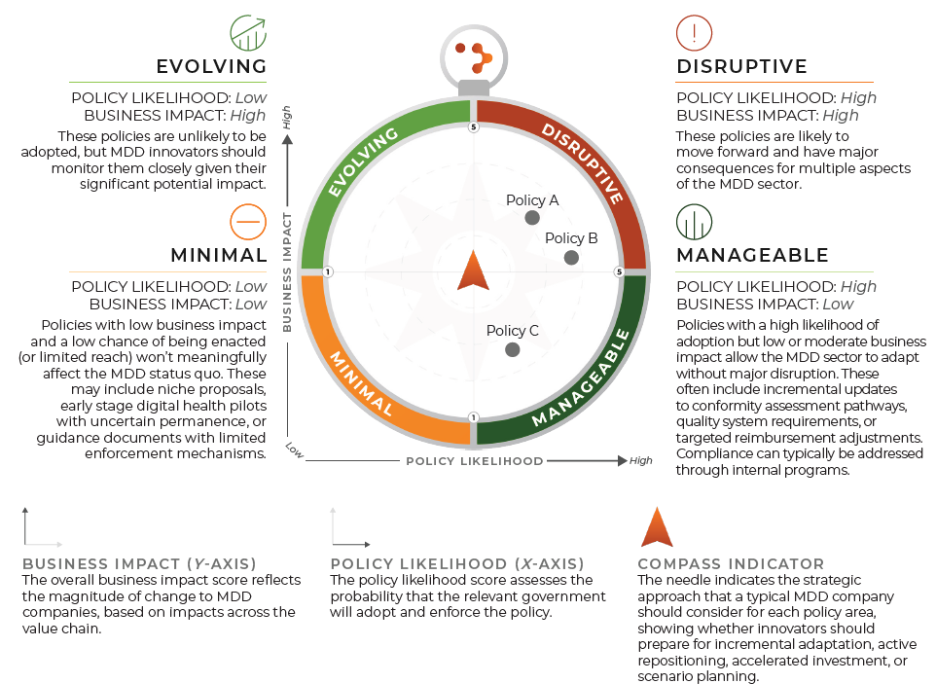
Figure 1 The quadrants in the Lux Policy Compass for MDD companies indicate actions that decision-makers should consider regarding the individual policies and the policy area.
How global policy is reshaping medical devices and diagnostics
Lux Research groups the most influential MDD policies into four priorities within the MDD service: Build Precision Treatment & Care, Innovate Point-of-Care Solutions, Healthcare Operational Excellence, and Streamline Laboratory Workflows. Introduced in Lux Research’s “The Next Era of Medical Devices and Diagnostics” report, these priorities reflect the industry’s broader shift toward connected care, operational resilience, and scalable diagnostic infrastructure. Most policies covered in the analysis affect one or more of these four priorities. Here, we’ll discuss the first priority, Build Precision Treatment & Care. For a discussion of all the priorities, please see the full report.
Build Precision Treatment & Care
Policy is operationalizing precision care as a life-cycle-managed requirement rather than a clinical differentiator.
High-impact EU regulations embed precision requirements directly into approval, reimbursement, and postmarket obligations. Frameworks like the EU AI Act, MDR/IVDR (see below for acronym definitions) transitions, the European Health Data Space, accelerated reimbursement pathways, and emerging cybersecurity regimes collectively set explicit expectations for algorithm governance, clinical and real-world evidence generation, interoperability, and continuous performance monitoring.
Outside Europe, policy is less prescriptive but converging in effect. In the U.S., FDA AI/ML-SaMD (see below for acronym definitions) guidance and reimbursement levers like Medicare Remote Patient Monitoring/Remote Therapeutic Monitoring shape how precision tools are updated, validated, and scaled post approval. Across APAC, regulators are emphasizing controlled adaptation, life cycle oversight, and clinical relevance over rapid experimentation.
The Lux Take: Precision care is no longer a clinical differentiator — it is becoming a regulated operating model, and the winners will be the companies that build the life cycle plumbing once and reuse it across products and regions.
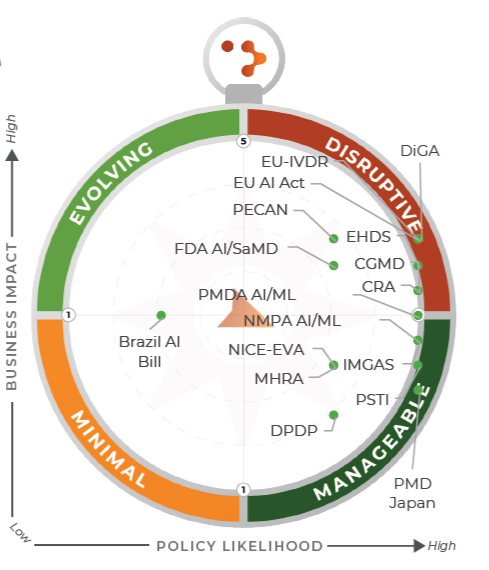
Figure 2 Policy Compass for Build Precision Treatment & Care.
Implications for the medical devices & diagnostics industry
The competitive divide in precision treatment and care is shifting from clinical performance alone to policy readiness across the product life cycle. Clinically strong solutions that lack robust AI governance, data control, cybersecurity, or postmarket discipline are increasingly struggling to scale beyond initial deployment.
This shift is also changing how precision solutions are evaluated. Procurement decisions are moving beyond clinical outcomes to include evidence of life cycle governance, such as risk management documentation, controlled update mechanisms, and real-world performance monitoring. These are becoming baseline expectations rather than differentiators.
As precision care becomes more software defined and continuously monitored, competitive advantage will increasingly favor organizations that can operationalize governance, evidence generation, and life cycle management at scale.
How medical device companies can build policy readiness into innovation
1. Build unified life cycle architectures.
Integrate evidence planning, algorithm governance, and scalable operations from the outset. Standardize validation, controlled updates, monitoring, and escalation so they can be reused across products and markets.
2. Redesign commercialization for the realities of procurement and reimbursement.
Early access pathways support entry but do not replace regulatory clearance, pricing, or scale. Companies must align clinical outcomes with operational value, demonstrating not just efficacy but also workflow reliability, system efficiency, and measurable impact for providers and payers.
3. Modernize product and partner ecosystems for resilience.
Cybersecurity, patchability, and supply chain stability are becoming core requirements for approval, procurement, and ongoing use. Products that cannot be securely updated or maintained will face increasing barriers, making stronger platform architectures and partner networks increasingly important.
Ultimately, policy convergence is driving a shift from incremental compliance to operating-model redesign. Organizations that embed policy readiness into how they design, build, and scale products will be best positioned to compete where partial readiness is no longer enough.
Policy is no longer something to navigate — it is something companies must design around.
Get the full report
The Lux Policy Compass for MDD scores 21 active and emerging policies across North America, South America, Europe, and Asia-Pacific and pairs each with a Lux Take and a recommended action. Lux clients can access the full report and accompanying analyst briefings at the Lux member site.
Policy acronym guide
| Policy | Abbreviations |
| EU AI Act | EU AI Act |
| U.S. FDA Framework for AI/Software as a Medical Device | FDA -AI/SaMD |
| China National Medicinal Products Administration Guiding Principles for AI/Machine Learning-Enabled Medical Devices | NMPA -AI/ML |
| Japan Pharmaceutical and Medical Devices Act AI/ML SaMD guidelines | PMDA – AI/ML |
| China Interim Measures for Generative AI Services | IMGAS |
| Brazil AI Bill PL 2338/2023 | Brazil AI Bill |
| EU In Vitro Diagnostic Regulation transition changes (Reg. 2017/746 + 2023/607) | EU-IVDR |
| U.K. NICE Early Value Assessment for Medtech | NICE-EVA |
| U.K. Medical Device Regime – MHRA Reform | MHRA |
| European Health Data Space Regulation (EU) 2025/327 | EHDS |
| India Digital Personal Data Protection Act | DPDP |
| EU Cyber Resilience Act | CRA |
| U.K. Product Security and Telecommunications Infrastructure Act | PSTI |
| FDA Cybersecurity Guidance for Medical Devices | CGMD |
| Germany Digitale Gesundheitsanwendungen | DiGA |
| France Prise en Charge Anticipée Numérique & Digital Medical Devices | PECAN & DMD |
| Japan – 2025 PMD Act amendment (Act No. 37 of 2025) | PMD |