Innovation Leader Profiles
This series highlights leaders who are making remarkable contributions, driving innovation, and making critical decisions in a rapidly evolving landscape to inspire and inform.
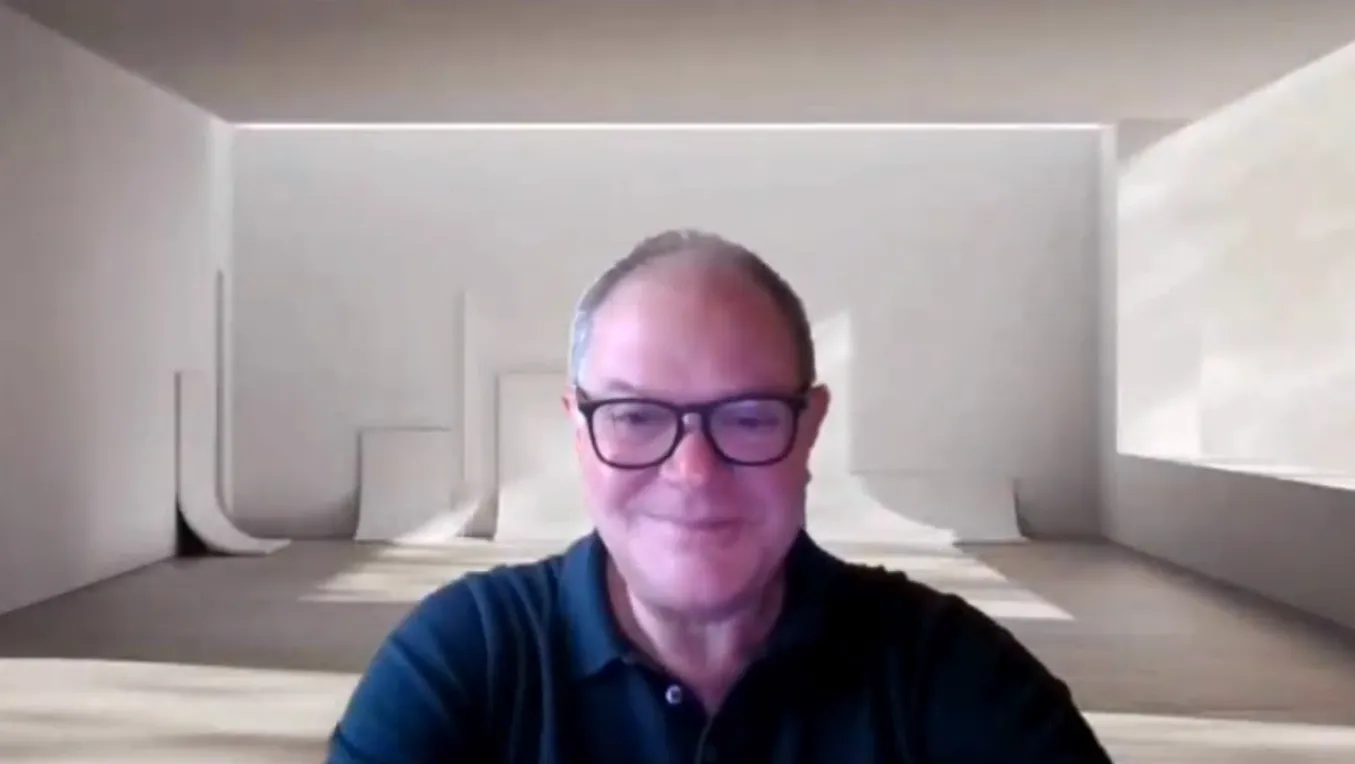

Antonio Batistini
CTO/CIO

In this exclusive video series, Marisa Kopec, CEO of Lux Research, sits down with Antonio Batistini, Chief Technology & Innovation Officer at NEXTCHEM (MAIRE group). From redefining innovation strategy to fostering cross-functional collaboration, Antonio shares how he’s leading a bold transformation within one of the world’s leading engineering and technology groups.
INTERVIEW HIGHLIGHTS
Career Success: New Products & Materials
(6 minutes)
Share
https://luxresearchinc.com/resources/chemicals/innovation-leader-profile-antonio-batistini/#career-success
Prioritizing Opportunities: Shifting Workflows
(4 minutes)
Share
https://luxresearchinc.com/resources/chemicals/innovation-leader-profile-antonio-batistini/#prioritizing-opportunities
Future Innovation: Technical & Cultural Shift
(6 minutes)
Share
https://luxresearchinc.com/resources/chemicals/innovation-leader-profile-antonio-batistini/#future-innovation
Moving Past No: Confidence and Vision
(4 minutes)
Share
https://luxresearchinc.com/resources/chemicals/innovation-leader-profile-antonio-batistini/#moving-past
Alignment & Collaboration: Providing Clarity
(4 minutes)
Share
https://luxresearchinc.com/resources/chemicals/innovation-leader-profile-antonio-batistini/#alignment-collaboration
The ROI of Lux
(4 minutes)
Share
https://luxresearchinc.com/resources/chemicals/innovation-leader-profile-antonio-batistini/#the-roi
Der Wert von Lux
(7 minutes)
Share
https://luxresearchinc.com/resources/chemicals/innovation-leader-profile-antonio-batistini/#value
Advice for Aspiring Innovation Leaders
(3 minutes)
Share
https://luxresearchinc.com/resources/chemicals/innovation-leader-profile-antonio-batistini/#advice
Read Full Transcript
Marisa Kopec: Welcome to the Lux Innovation Leader Profile series. I’m very excited to have Antonio Batistini from NEXTCHEM here. He’s the Chief Technology & Innovation Officer, and one of our esteemed clients in our Executive Partner program. So I just want to say thank you. It’s a privilege to serve your organization, and it’s a joy to work with you, Antonio.
Antonio Batistini: Thank you very much. It’s my honor and pleasure to be here. So thank you so much. Really appreciate it.
Marisa Kopec: Antonio, let’s get started with just a brief overview of what you do at NEXTCHEM and the goals and objectives of your role.
Antonio Batistini: I started in NEXTCHEM three and a half years ago. It feels like a month ago; so many things have happened. MAIRE as a group, of which NEXTCHEM is now one of the two pillars, started as a large engineering, procurement and construction company for chemical plants and chemical technologies. But as an EPC provider, we were agnostic about technology. So we were integrating and materializing technology: putting together technologies from other technology providers and realizing the industrial facility to demonstrate the value of those technologies. In 2018, MAIRE took the decision, specially linked to the emerging trends of energy transition and sustainable chemistry, to also become a technology player: to develop, acquire and promote new, differentiated technologies as a classic technology provider business model, selling licenses and engineering packages. And therefore to position ourselves, from an agnostic position on technology, as a selective, differentiated and distinctive technology provider. For this purpose, they decided to hire a Chief Technology & Innovation Officer. So my role since I joined is really to create the vision, the pipeline and the technology roadmap that will help us become a leading technology provider in competition with well-established, very strong players. It is a big challenge, but now I think we have a very robust vision of what we want to do in three different business lines, and we are progressing well, both organically and inorganically, by scouting for new technologies on a global basis, thanks also to the help of Lux Research, and trying to accelerate bringing new technologies to the market and making them a reality. So it’s a very exciting role.
Marisa Kopec: Such a fascinating journey that you’re on. As you look to the future and that vision, what do you see ahead in terms of innovation strategy, and how is the organization preparing for the changes?
Antonio Batistini: Well, first of all, what we’re doing is not only a technical challenge, but also a cultural challenge. Because we’re moving, as I said, from an agnostic culture of integration, especially of large-scale plants, to becoming a selective, distinctive and differentiated provider of proprietary technologies, and this requires a big shift in the way we’re doing things. In fact, slowly but surely, we are changing the way we work together. MAIRE grew by acquisition of very different technology and engineering companies and providers, with a vertical structure within each of the sister companies that we acquired. Now we are moving to a more classical, cross-functional and matrix level of interaction. So we are working on integrating what we call strategic innovation in a transversal way across the entire organization and the three major business lines that we’re now focusing on. The objective of strategic innovation is to bring any new technology from TRL 1 to TRL 9, so the first commercialization, the first reference plant. At that point we hand over the technology to the operations units of the business line, which take care of the incremental innovation part, of course always keeping a strong dialogue with the strategic innovation team. So this way of working is cross-functional, following a rigorous stage-gate approach: not precise, but rigorous. Otherwise you get lost in details and never bring anything to the market. I want acceleration, because at the end of the day we are not an academic unit. We need to bring a concept from concept shaping to first industrial scaling in a maximum of four years, including construction of the pilot plant. Otherwise the NPV associated with any new opportunity is going to be negative from the beginning, so it doesn’t make any industrial sense. It’s a big cultural change, but this is the way we’re going to work. We’re also going to have a strategic marketing organization dedicated to defining the addressable opportunities in this big space, and how much share we’re going to get, based on the strength of the unique value proposition of the technologies that we’re going to develop and bring to the market. That is a completely new exercise. But by following this rigorous stage-gate approach with all the projects we’re doing, there is also a higher, measurable capacity to determine the investment we make in every project and, after commercialization, to measure the return on the investments we’re making. That is something we can promote to the market and to our investors, to show the value we are creating by investing in the strategic innovation capabilities that we’re building. For this purpose, we’re also building a larger, integrated center of excellence, where we’re going to have our own dedicated lab facilities to do the chemistry and the first demonstration of new concepts: new chemistries, new catalysts, new ways of doing things. And then in the same place we’ll have relatively large facilities where we’re going to locate all our industrial demonstration plants, so we can demonstrate the scalability of these concepts and leverage the lab facilities at an analytical level to monitor and quantify the product quality and the process characteristics that we’re going to sell. So we’re going to become a very strongly integrated center of excellence, which is also a very nice place to hire new resources and new skills, and to grow young people to integrate this vision of doing things.
Marisa Kopec: You mentioned academia, and the cultural and mindset change. I hear this a lot from R&D and innovation leaders: they’re trying to move the way they work from being more academic to more business oriented. What are some of the ways you’re driving that kind of change?
Antonio Batistini: First of all, we need to put priorities on what we’re doing. We cannot do everything, though there are a lot of interesting opportunities. Every day there’s something new, and you say, “Oh my God, there is also this one.” So what is very critical, and we’ve done a great job there, is to define our technology roadmap and where we want to become a leader as a technology provider, with a very clear definition and hypothesis of the key value proposition that we’re going to bring to the market to differentiate ourselves and possibly capture a larger share of those addressable opportunities I discussed before. We also need to keep an eye on the technology world on a global basis. So we keep nurturing relationships with and access to universities and research centers, attending conferences, especially with the research team, in order to be aware of what is going on and to spot early enough if there is something really disruptive that would make sense to integrate into our technology roadmap. And this comes to the famous discussion of doing open innovation: spending money on relationships at an academic level, following startups and so on. That’s actually why we are in Rome today: we are kicking off a study for the next year with the LUISS Business School in Rome and Professor Chesbrough, the inventor of the open innovation concept, from the University of California, Berkeley. I want them to analyze the way we do things and define how a company like ours, which in the standard capitalistic world is always aiming for exclusivity, ownership and the economic materialization of its technical vision, can improve and be more effective in the way we collaborate with the external world and within the value chain: understand earlier the needs, translate those needs into new realities, and distribute value in the value chain while preserving our exclusivity on the technology core that we want to commercialize directly. So that’s an interesting exercise, but it’s also part of the culture change that we need.
Marisa Kopec: Very interesting, and it’s a very dynamic set of initiatives that you have going. How is Lux Research helping you and your organization with these changes, and with understanding emerging technologies and the work you’re doing?
Antonio Batistini: Well, I’ve known Lux Research for many years, because I’ve been using and working with Lux since I was at Dow Chemical. I was the one bringing it in, in 2010 or something like this. Then I moved on and collaborated a lot with Lux, and then I brought it back into this reality when I joined. And I must say that Lux has been transforming as well over the course of time. At the beginning of my experience with Lux, you were merely an excellent database of information on different startups, clustered around different market segments and opportunities. Now you are becoming more and more an active consultant and an interpreter of the trends, the drivers and the different opportunities that are linked to the growing number of startups around the world. That is very difficult work to do now, because there are so many that, honestly, you are not physically able to cover all of them like you were doing in the past. And the past is not 100 years ago; it’s only 10 or 15 years ago. So it’s a big challenge for Lux, but I see your transformation as very effective, and I appreciate a lot your direct interaction with me, with your dedicated people and also with your experts. Now we’re going to have a set of discussions around core thematic sets that are relevant to us, and you will help us identify the new trends and spot emerging technology drivers in these arenas, as well as facilitating networking with people along the value chain. So I think there is a very useful discussion about how these technologies could be integrated and, very important, adopted early enough by other people, as offtakers or maybe with a supply agreement, in an environment which is very different from what it was 15 years ago when I was at Dow Chemical. Now you have the energy transition, which requires the adoption of new feedstocks, new offtakers, new qualifiers of new materials coming to the market. There are a lot of legislations and directives coming, and I think you are doing an amazing job trying to bring all these elements together and facilitating that dialogue, which is of paramount importance to people like me and companies like mine. Because otherwise you risk getting lost in too many fast-changing and fast-growing opportunities, value chains and players around the world. So it’s really a great support that you’re providing to people like me.
Marisa Kopec: Thank you. I really appreciate that. I almost have a tear in my eye listening to you articulate the change that we have been going through, because it has been intentional: moving beyond our database capabilities and becoming a trusted advisor, particularly to chief technology officers in chemicals and energy, as well as some other industries. So I really appreciate that. When you think about the advice and the work we do to help you with both front-end innovation and decisions around your roadmap and prioritization, is there any way to quantify that business value impact in terms of cost savings or time savings? Are you seeing a return on investment in working with Lux?
Antonio Batistini: Yes, I see the return on the investment we are making. I’m talking a lot with my personal mentor and advisor in your company, on a daily basis, and I see a lot of this materializing, with Lux directly involved in our journey. We shared our technology roadmap with you, and there is a very good understanding from your experts and advisors about what we’re doing. You’re really trying to organize focused audiences and meetings where we are going to discuss these themes. I’m invited to all of your forums, and you’re exposing me regularly to people and players that can definitely be of interest to us, because we can create, especially in these new spaces, those famous letters of intent and memorandums of understanding. They are really fundamental for an innovative technology provider, because they give some certainty that there is interest from the market in what we’re doing, putting the pull behind the push that we are making by developing these new technologies. And also facilitating the understanding of market needs and drivers, so we can really try to translate them into solutions that best answer the unmet needs, drivers and pains of the market. That is critical to real innovation, because otherwise you are the old-style academic innovator: you do something, then you hope somebody will use it. I’ve been a firm believer, throughout my career, that innovation starts from the market and from understanding what is not going well, or not done well, today. That’s why you need to work to provide a more effective solution. Often innovation doesn’t need rocket science; it simply tries to address the unmet needs, pains, drivers and desires of the market space, which often end up in the consumer’s hands. I got my experience on this in my past lives and I found it very, very powerful, and you are really facilitating that in a very effective way. So I hope that with the creation of this portfolio, we’re going to include the investment we’re making in the relationship with Lux as part of the investment amount associated with new revenues and margins. And so there will be a measurable return on investment from our backlog of value creation in the company, which is part of the strategic innovation portfolio we’re trying to create.
Marisa Kopec: With all this change, I’m sure alignment, cross-functional collaboration and getting your colleagues across the executive team to agree on decisions are important. What are some of the tactics and strategies you use to drive alignment and collaboration as part of being a change leader?
Antonio Batistini: Well, the internal tactic is to make sure we involve every function in what we’re doing. I believe that this is a real cross-functional exercise. You cannot work in silos and pretend to be an expert on everything. The value is really in bringing experts from every different function and across all the different business lines to help deliver all the elements that I then have the accountability to integrate into the final technology package and business plan behind the materialization of an effective, profitable and sustainable solution for the market. And by doing this, you make people part of these innovation journeys. You make everybody feel important and contributing, so you don’t create a culture where people sometimes feel they are on the side, or less relevant than others. When you talk about innovation, everybody wants to be in innovation, because of course there is higher visibility and attention. But we also need the people we have today in the market to maximize the revenues and margins, because these are the engine and the fuel we are going to burn in order to sustain the creation of the new offering. Involving them according to their availability and competencies to deliver a common objective makes this journey our journey, not my journey. And that is the change that we’re going to drive at every level in the company, from junior people to senior people, and transversally to all the business lines and functions. It’s complicated, but we wrote a very detailed way of collaborating together: within each function, and what each function can provide to each project. So we have a clear definition of the team. We use flexible allocation of resources, so the team is focused. We work on a project until we achieve the milestones that we set, and then the team is dissolved and reallocated to different projects, or integrated back into the original function they were working in within the business lines. So there is a flexible way of belonging to a vision, which is rewarding to people.
Marisa Kopec: Right. And providing clarity, I think, is very important as well. You truly are a great leader. As you look back on your career, what is one project or initiative you’re very proud of and learned something from?
Antonio Batistini: Well, I had many examples, from developing the materials and system solutions behind products that everybody knows, like Crocs shoes, to many other products and applications. But the one that was the most inspiring to me, and gave me the insights on how to innovate, was the development of the XLA elastic fibers, based on polyolefin materials, that came into competition with Lycra from DuPont. It’s probably one of the best-known brands and trademarks in the world. When I proposed this idea to develop polyolefin-based elastic fibers during my time at Dow Chemical, at the beginning people were kind of having fun, saying, “Oh, this is not possible. Lycra is the perfect material.” And that’s where I really learned that nothing is perfect. When we started to deep dive into the characteristics of Lycra and the way consumers were using Lycra, we found three major deficiencies. The first is that the elastic fiber, an excellent material, was too powerful. The material was really too elastic and powerful, so its use was limited to very contouring sport garments, but it was missing a soft stretch behavior, which is the one behind comfort. For example, for men’s shirts or workwear and things like that, it was not the best material, and actually the whole way of processing Lycra was determined by the need to control the over-stretch power of the material. The second and third were temperature sensitivity and chemical sensitivity. In the past, Lycra was very weak in terms of chemical resistance, so applications like swimwear or dry-cleaning processes were impaired by using Lycra, because it had very poor resistance. I still remember when I had a couple of black jackets with a little bit of Lycra inside, and soon I started to see white hairs coming out, which were the fibers breaking. The same happened when treating the product thermally, which limited, for example, the adoption of Lycra in combination with temperature-sensitive fibers like wool or silk. And the Dow XLA fiber, still called XLA fiber today, overcame all these limitations, providing real comfortable stretch and very high resistance to different chemical and temperature environments in combination with other fibers. It was really a product that, at the end of the day, DuPont wanted to buy, because it overcame all the limitations of Lycra. Then there were a lot of political situations, and Dow didn’t want to sell it to DuPont. But it was a big learning experience: observe the market, study how people use products and the limitations of materials, and then seek how you can address those unmet needs and pains, as I said before, and desires. That really helps to define something fundamentally new and performing. And the fiber is still alive today. It went through different producers and is now owned by an Italian company, and it’s still called XLA fiber. So that was a big learning experience.
Marisa Kopec: This is an incredible story. It’s a wonderful articulation of what we call Lux human-centric innovation: deeply understanding consumers, their attitudes, beliefs and needs, and then using technology to innovate and bridge those two things together to invent something new. It’s truly the heart of human-centric innovation. I think your story is quite profound, and what I think is most interesting, and I’d like you to talk a little about this, is when someone told you no, you couldn’t do it, or you shouldn’t think about something in a different way. What inspired you to have the confidence to keep going when you were told not to?
Antonio Batistini: Well, that is part of personal traits, I think, but you could refer to the old story of Ford, and what people were saying about horses and cars. If you are an innovative spirit, an innovator, you have to believe in what you’re doing. And this is, I think, at the foundation of all startups: there are a lot of people that try crazy things, and they believe in what they’re doing. And resilience is part of the personal traits, because innovation is a roller coaster. You go up and down, up and down. It’s like the stock market: the shares can go up and down, but the median always needs to go up. So you always need to show consistent improvement in achieving the declared milestones. And you need to be able to connect the dots. Sometimes something that works on something completely different from what you’re doing might give you the spark to ideate and transfer knowledge to completely different applications and products. That is the normal spirit. And also showing by example: again, not being closed in silos is very important. Communication is key. Showing failures and successes to the misbelievers is very important, because then you show your progression, you show what you learned, you show where you’re going, you show samples, you show new materials, and slowly all these people also become sponsors and fans of what you’re doing. It’s a Gaussian distribution: you have the innovators and the visionary people, thank God a small part of the Gaussian distribution of personalities in any company, and then the early adopters, and then the average people, who will come once they start to physically see what you’re doing and its potential success. That is normal in any innovation process that you try to materialize.
Marisa Kopec: We use these interviews as educational materials for Lux clients who aren’t at your level and aspire to be a leader. What’s one piece of advice you’d give someone who wants to have your job someday?
Antonio Batistini: My only suggestion is to be yourself all the time. Never give up your beliefs, and listen to everybody. Be open to any criticism, suggestions and proposals, because, you know, nobody is born enlightened, and the truth is always in between. Actually, you should always favor constructive criticism. Constructive is very important: not just criticizing for the sake of criticizing, but constructively criticizing. So believe in what you’re doing and never give up, but also be realistic and true. Be able to face the brutal truth all the time, and realize when something can and should progress and try to overcome the hurdles, but also when it is time to kill something that has demonstrated it is probably not going to work. Killing early is a success story, even more valuable than procrastinating forever on something that will never materialize, at least in the way you hypothesized. So that is always my suggestion: always be honest, fair to your people and motivational. Give the energy to overcome the bottoms of the cycles that will always be there in innovation, and think positive, but also be realistic and always be able to face the truth when there is evidence. You have to face it, not escape it.
Marisa Kopec: That is absolutely fantastic advice. I want to say thank you very much for spending some time with me and giving us your words of wisdom. Again, it’s a privilege to serve you, and I look forward to seeing you soon.
Antonio Batistini: Thank you so much for your support and for giving me this opportunity. Highly appreciated. My pleasure.